PROTECTED MARINE LIFE ... PERMITTED TO BE KILLED
Shark nets and drumlines are deployed along parts of the South African coastline as a shark control measure.These devices are not barriers that keep sharks away from beaches. They are fishing gear designed to catch large sharks.In doing so, they also catch many other marine animals, including dolphins, turtles, whales, rays and various shark species.Several of these animals are listed as protected under South African legislation.We are launching a High Court application to challenge the permits that currently allow the continued use of shark nets and drumlines.
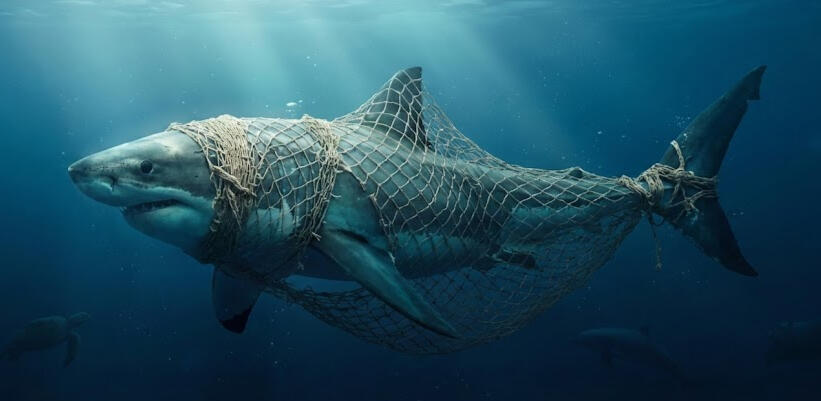
WHAT SHARK NETS AND DRUMLINES REALLY ARE
Shark nets are often described as barriers that prevent sharks from reaching beaches.They are not barriers.Shark nets are gillnets set parallel to the coastline. Their purpose is to catch large sharks that move through the area.Drumlines are baited hooks anchored offshore that catch sharks in a similar way.These devices do not form a continuous wall in the water and do not prevent sharks from entering an area.Their function is to catch sharks, of which the White Shark is endangered, but also legally protected in South Africa.The issue is that the nets and drumlines also catch many other marine animals, some of which are critically endangered.. Bycatch includes harmless sharks, dolphins, turtles and whales.
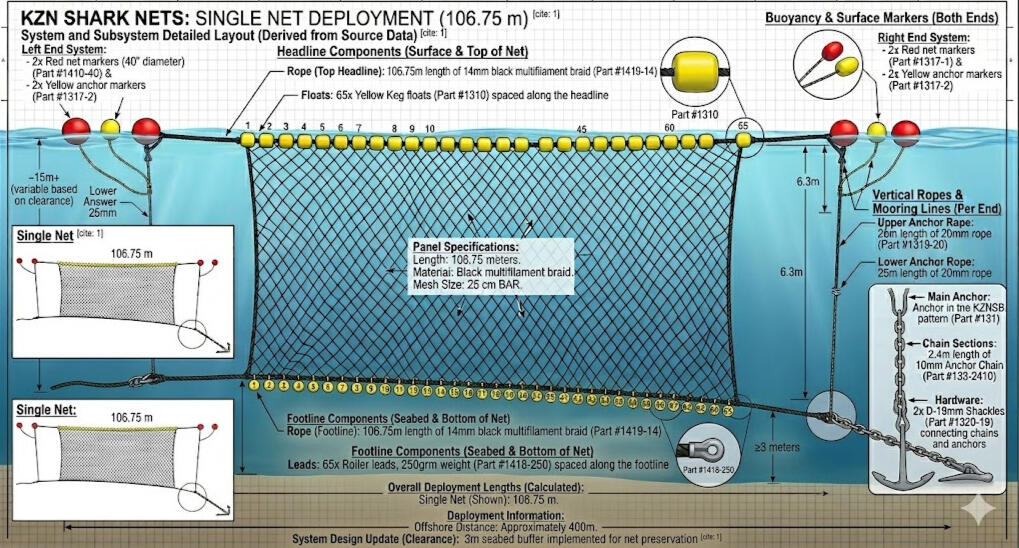
Typical shark net deployment along the KwaZulu-Natal coastline.
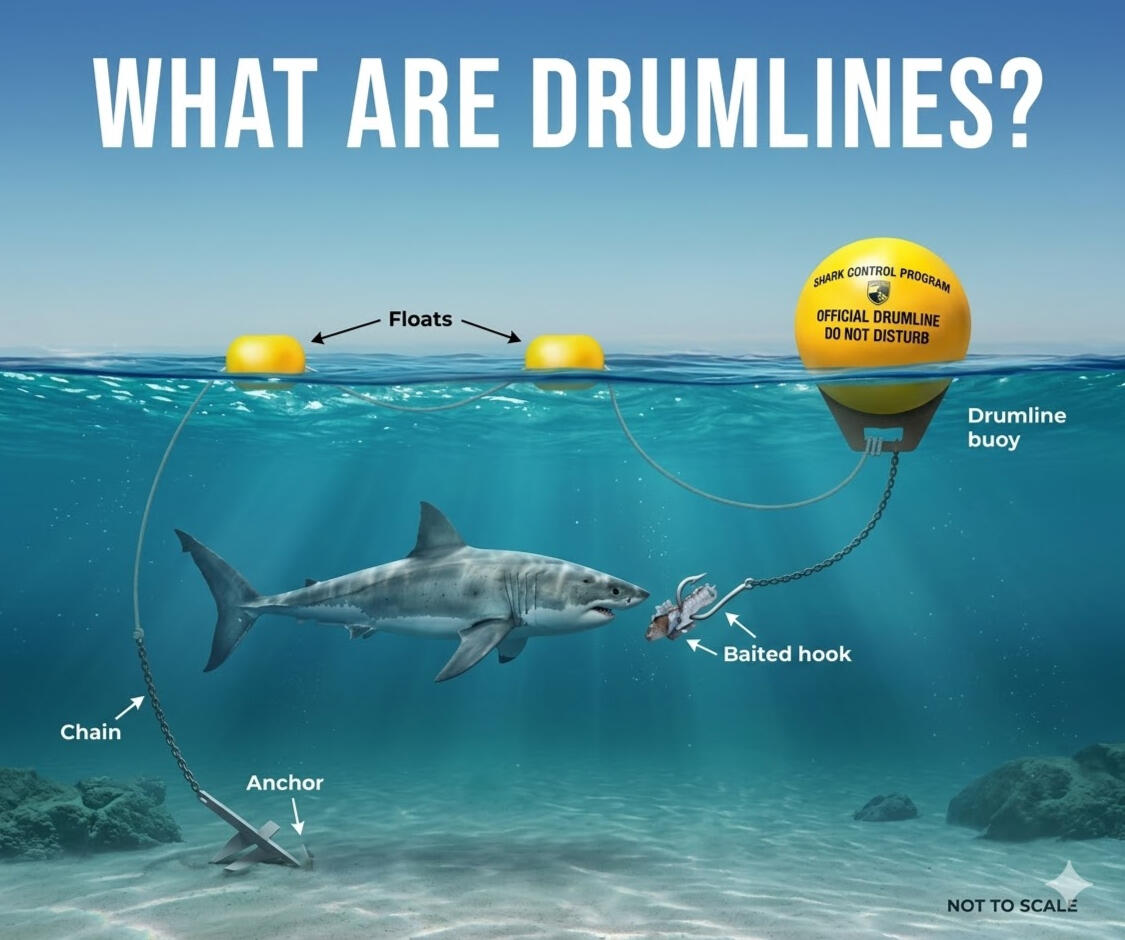
Typical Drumline deployment along the KwaZulu-Natal coastline.
The drumline, the KZNSB will tell you, is a softer, smarter alternative to the old shark nets. Fewer dolphins. Fewer turtles. Fewer non-target casualties. They are not wrong about that. However, they target, catch and kill protected White Sharks, and significant numbers of endangered Hammerhead sharks (amongst other harmless species)
WHAT GETS CAUGHT
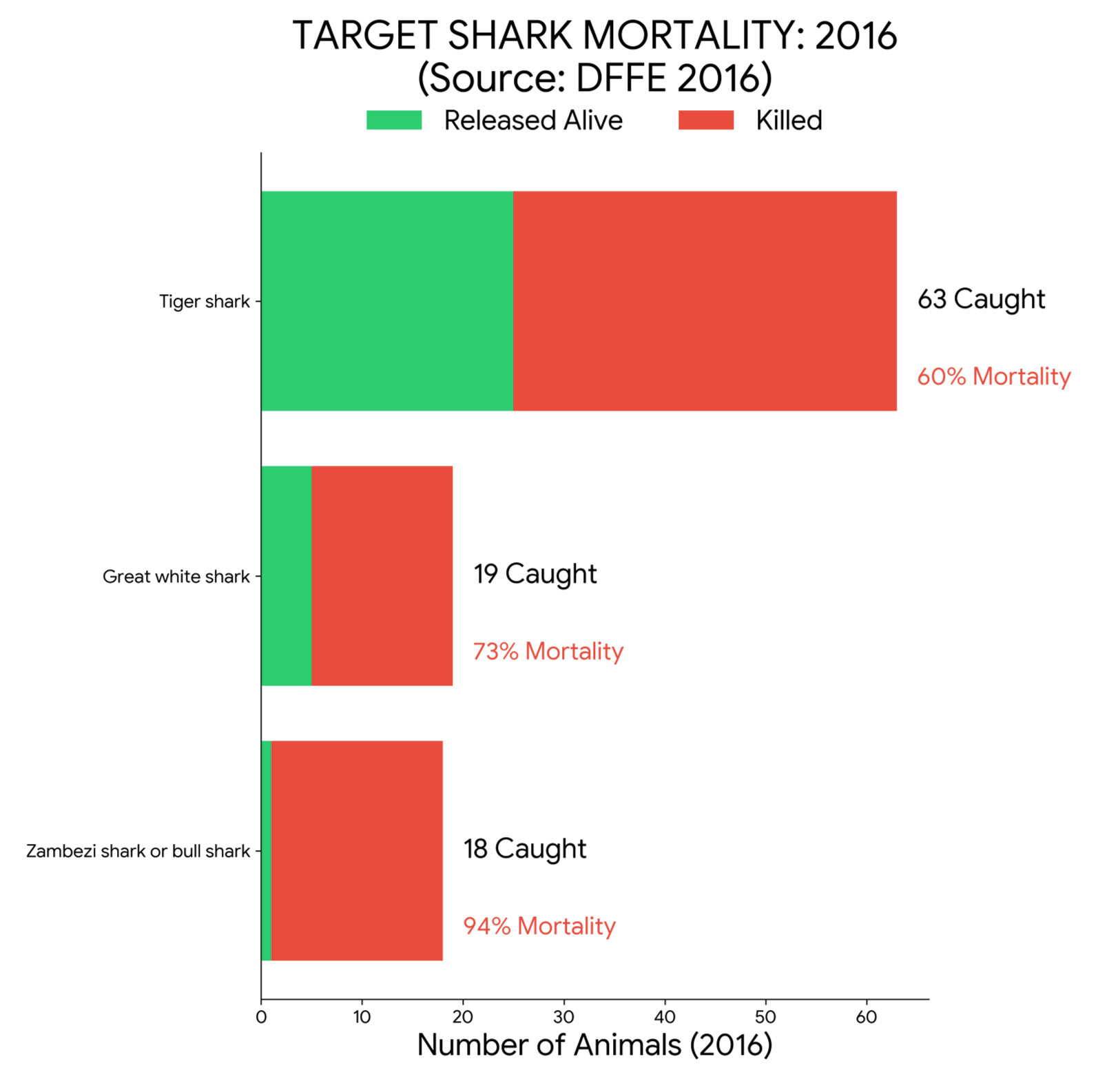
Historical marine life catch and mortality data derived from DFFE 2016 records, highlighting the consistent ecological impact of bather protection gear over the last decade.
Text
The True Cost: A Typical Year in the Nets
While the recent 2024 Parliamentary Inquiry (Question No. 1409) provided a shocking look at recent figures, the dataset provided by the Department was incomplete. To show the impact of a "typical" year, we extracted details from from the data supplied in Question No. 1409.
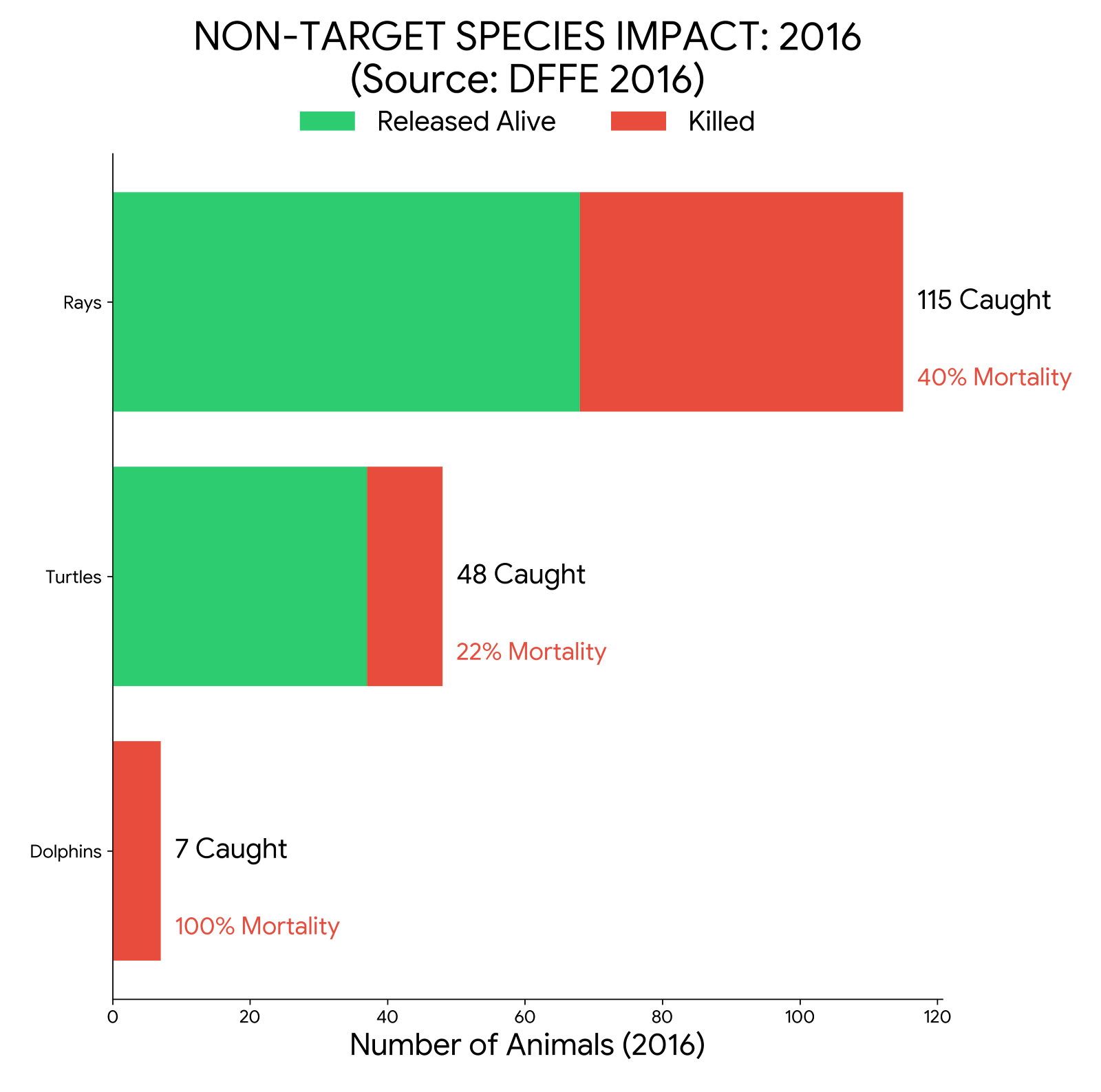
The 2016 data confirms that the high mortality rate is not an anomaly—it is the standard.
2016 Catch Highlights:
Targeted Apex Predators: Almost every Zambezi (Bull) shark caught was killed (94% mortality), while Great Whites faced a 73% mortality rate.
A Death Trap for Dolphins: In 2016, the survival rate for dolphins was zero percent. Every single dolphin entangled in the gear died.
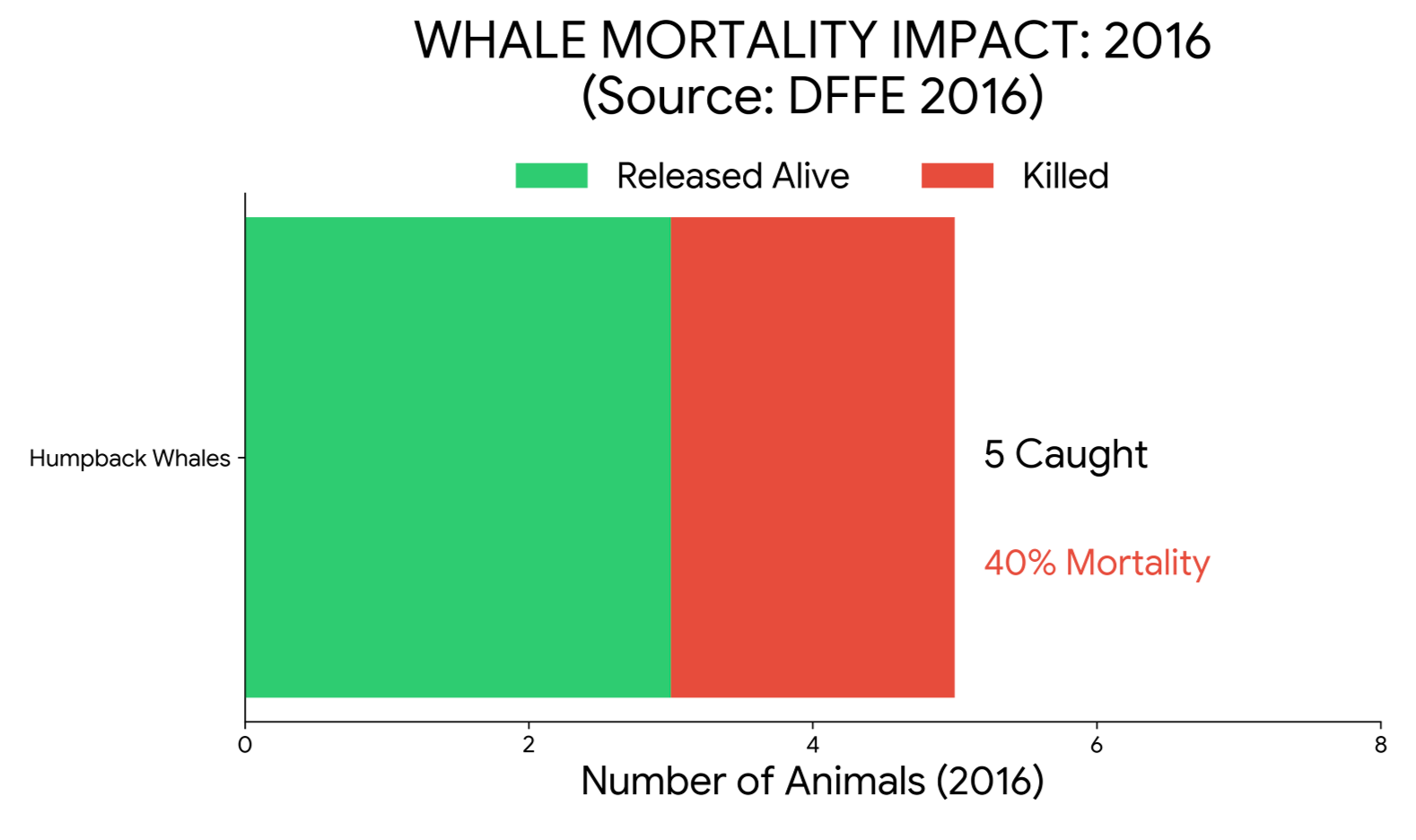
Whales Under Threat: Even massive Humpback whales are not safe; 40% of those caught in 2016 lost their lives.
Indiscriminate Killing: Beyond sharks, hundreds of rays and dozens of turtles were trapped, proving these nets are indiscriminate "walls of death" for our marine heritage.
The Conclusion is Clear
Whether it is 2016 or 2021, the "body count" remains consistently high. These figures highlight the urgent need for the modern, non-lethal alternatives.
Text
THE LEGAL CHALLENGE
Several marine species affected by shark nets and drumlines are listed as protected under South African environmental legislation.Despite this, permits are currently issued that allow the continued use of these devices along parts of the KwaZulu-Natal coastline.These measures are designed to catch large sharks, but in practice they also catch and kill a wide range of other marine animals, including protected and vulnerable species.The available information indicates that the permits do not prescribe clear limits on the number of animals that may be caught or killed.We do not understand how permits authorising lethal measures that target protected species, and that have a significant impact on marine animals in general, can be issued without defined limits or a clear assessment of their impact on those species, especially as non-lethal alternatives are available.We are launching a High Court application to review the lawfulness of these permits.You can find the details in our paperwork section below. Here you will find an overview of where we are, correspondence to the Minister, and his response. The Minister's Parliamentary reply as well as catch statistics, and various other documents.
THE PAPERWORK
This section contains the correspondence and legal documents relating to the High Court application concerning shark nets and drum lines.Enter your name and email below to receive access to the documents.
SUPPORT THE CASE
The High Court application reviewing the permits for shark nets and drumlines is being funded through public support.Public-interest litigation of this nature involves significant preparation and legal costs. These include legal representation, preparation of the court record, expert scientific input, and other expenses required to properly present the matter before the court.The objective of the case is to obtain judicial clarity on whether permits authorising lethal shark control measures that affect protected marine species comply with South African environmental legislation.If you would like to support the legal challenge and help ensure that the matter can proceed, you can contribute via the campaign fundraiser below.
This case proceeds only if it is properly funded.Legal proceedings of this nature require sustained funding for legal counsel, court preparation, and expert scientific evidence.
FAQ
Why a court case ?Many years of asking, awareness campaigns, documentary films, petitions and meetings have not helped.These nets and drumlines are fishing devices and operate in accordance with a permit issued by the government. If the court finds that the permit is unlawful it will have to be withdrawn, and another way will be used to protect beaches.2. How strong is the case?We think we have a strong case.The case raises important legal questions about the issuing of permits that authorise fishing of protected marine species.Available information indicates that the permits issued for shark nets and drum lines do not prescribe clear limits on the number of animals that may be caught or killed.The court will ultimately determine whether these permits comply with the environmental legislation intended to protect marine species.3. If shark nets are removed, how will bathers be protected?Please bear in mind that most beaches along the South African coastline have no form of protection at all, and that at some beaches around Cape Town non lethal measures are implemented.Shark nets and drumlines are only one method that has historically been used to reduce shark risk. (since the 1950's)By now it is 2026 and a range of non-lethal approaches are increasingly being explored and implemented in different parts of the world. These include shark spotting programmes, aerial surveillance, barrier systems, electric and electromagnetic systems as well as public education measures.This court case does not seek to determine how shark safety should be managed. Its purpose is to examine whether the current permits authorising shark nets and drumlines comply with the law.